Search in this site

1/2/13

The Secret Life of the Dog youtube video


We have an extraordinary relationship with dogs – closer than with any other animal on the planet. But what makes the bond between us so special?

Research into dogs is gaining momentum, and scientists are investigating them like never before. From the latest fossil evidence, to the sequencing of the canine genome, to cognitive experiments, dogs are fast turning into the new chimps as a window into understanding ourselves.

Where does this relationship come from? In Siberia, a unique breeding experiment reveals the astonishing secret of how dogs evolved from wolves. Swedish scientists demonstrate how the human/dog bond is controlled by a powerful hormone also responsible for bonding mothers to their babies.

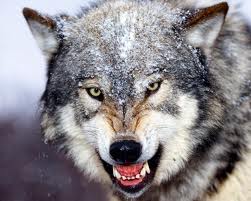
wolf wallpaper very great

 Moon wolf wallpaper

 Dark wolf wallpaper

What is a wolf pack mentality

You can find a host of wolf packs within high school and college athletic programs. And why not? In a battle of mascots, North Carolina State University's Mr. Wuf would devour Sammy the Slug of University of California-Santa Cruz hands down.

However, in nature, wolf packs are less about ferocity and more about order. The complex wolf pack dynamics more resemble those of a teenage clique than a group of wild beasts. Of course, they still stalk prey, such as elk or rabbits, and get into vicious fights with each other, but you'll discover that these canines follow an incredibly sophisticated group hierarchy.


Wolves naturally organize themselves into packs to maintain stability and assist with hunting. These are often groups of three to seven wolves led by an alpha male and alpha female. From there, the couple's pups and possibly younger, unrelated wolves comprise the rest of the pack.

What is a wolf

Answer


The Wolf (Canis Lupis) is a wild dog technically, dogs are domestic wolves sort of. 
Common Facts:
There are many kinds of wolves, The Gray Wolf A.K.A The Timber Wolf. 


Wolves are incredible animals as they will care for there cubs (or pups) with great care indeed I study wolves and watching their process is quite fascinating as I have watched their cubs grow up and seen the few breeds. Wolves come in many sizes and shapes and colours like; Brown, Creamy White, White, Black, Grey, Reddish Brown or brown they can also come in a mixture of these colours Eg Grey and White. Unfortunly the Mexican Wolf IS endangered, even more sadly they are extinct in the wild =(. 
Evolution:

A werewolf

A werewolf is a mythological creature that is sometimes a person and sometimes a wolf, usually believed to prey on people. In different versions of folklore, the werewolf is either a magician or the object of a curse. In much modern literature and film, the werewolf is said to shape-shift under the influence of the full moon and to be vulnerable only to a silver bullet. The word werewolf derives from Old English wer-wulf, meaning "man-wolf."

Tales of werewolves abound in cultures from all over Europe, from Russia to England and from Norway to Italy. Werewolves appear in some of the earliest literature of these regions. Because the legend spans such a vast geographical and cultural area, there are many variations.


A person may become a werewolf in many different ways, according to different cultures. The curse may be effected by engaging in cannibalism or Satanism. Alternatively, stripping and wearing articles made of wolf skin, drinking water from a wolf's footprint, or being bitten by a werewolf may cause the change. A superstition arose in Portugal and later in Brazil that the seventh son, or the seventh son of a seventh son, would be born a werewolf. To this day, the President of Brazil is officially the godfather of all seventh sons, a practice resulting from the tendency in earlier times of parents to abandon such children.

Some versions of the werewolf tale claim that there are cures for the condition, while others hold that death by silver bullet is the only solution. One such cure is to remove the wolf skin, if wearing it brought about the condition. Other remedies include religious methods, such as reproaching the werewolf or making the sign of the cross. Magical cures include drawing three drops of blood and striking the creature with a knife three times on the head. Strangely, while most people no longer believe in werewolves, there is a medical condition known as clinical lycanthropy in which the sufferer believes himself or herself to be a werewolf.

1/1/13

Shiba Inu Temperament

Shiba Inu Temperament, Personality, Behavior, Traits, and Characteristics, by Michele Welton. Copyright © 2000-2012

People often find themselves drawn to the Shiba because he is conveniently sized, handsome and hardy, easy to groom, and clean and quiet indoors. However....these interested potential owners must explore this breed in more depth, else they might be making a big mistake.

The Shiba Inu, you see, is very challenging to raise and train. A bold, high-spirited "big dog in a small body," he must always be kept on-leash, for he has a high prey drive and quick reflexes and will pursue anything that moves. He can outrun and outdodge any human....and frequently does, for he has an independent spirit. Shibas are true runners.

Shiba Inu owners need secure fences. Indeed, if you plan of leaving your Shiba outdoors unsupervised, he really should have a covered run (as in chainlink all across the top) if you want to be sure of finding him in the yard where you left him. Otherwise, his ingenuity and agile jumping/climbing/digging skills may send him over or under an ordinary fence. And once he's loose, he's gone.

10 Common People Foods that Can Kill Your Dog

People Foods that Can Kill Your Dog

It would seem dogs don't much mind eating anything they can get their lips around, including those things that are not good for them. With this in mind, I ask one very important question,"Are you killing your dog with everyday people food?"

Over the past say, thirty years, how and what we feed our dogs has evolved drastically. In the past, we were certain that our canines required a very high meat, as well as other protein diet to survive a long healthy life. Because of this, dogs have been fed a high-protein diet that has resulted in poor coat condition, malnutrition, imbalance in metabolism, hair loss, and weakness. Today, we have discovered that dogs are actually omnivores, requiring meat as well as vegetables and other non-meat foods for successful long healthy lives.


Our other favorite furry creature is the house cat. Now this pet is a true carnivore. Cats have the highest requirement for protein of any domestic species.

Kick the Dog

"I'm getting five hundred phone calls a day asking what the hell is going on, that our police force is brutalizing women and misplacing children. Christ, all this picture needs now is for someone to kick a puppy for the cameras."

A character performs an act so casually cruel or evil that you know that they are scum, incompatible with the moral rules of the series that they're in. This is a signal to the audience that it's okay to dislike the character. In short, dog-kicking is a sure sign that the writers want the audience to be wary of this character, even if he is nominally one of the good guys.


What separates this trope from other evil or cruel acts is that not only is the act bad, it's also pointless as far as the plot goes. It is the fact that it had no other point than to be evil, that puts them on the bad side of the Rule of Empathy.

Swapping Germs: Bad for You and Dog

Dog owners and their pets may exchange harmful mouth bacteria that can cause gum disease and tooth decay in both humans and canines, according to a report in Archives of Oral Biology. Previous research has shown people can transmit oral bacteria to children through close daily contact. But few studies have looked at the bacteria exchanged between people and their pets.

About 5% of canines get dental caries, which includes tooth decay and cavities. But rates of periodontitis, an inflammatory mouth disease, in dogs have been reported to range from 50% to 70%.

Researchers late last year worked with dog owners in Japan to assess the prevalence of 10 bacteria that are associated with periodontitis in people. They also analyzed an oral microbe commonly found in dogs but not humans. Study participants were 81 members of 64 families that owned 66 dogs of various breeds and ages. Participants were divided into three groups: Most of the people had a high degree of contact with dogs while the others had little or no contact with dogs.


Analysis of dental plaque found all 10 of the human bacteria in dogs and humans. The most common—Tannerella forsythia, Porphyromonas gulae, and Campylobacter rectus—were detected in significantly higher levels in dogs than owners. As many as a quarter of the dogs and owners with close contact shared Eikenella corrodens bacteria. Periodontal bacteria were more prevalent in high-contact relationships and in older dogs.

The Truth About Corn in Dog Food


Some insist corn is a nutritious dog food ingredient… while others denounce it as nothing more than a problematic cereal grain.

So, what should you believe? What’s thetruth about corn in dog food?


Is it good? Or is it bad?


Well, that depends on whom you ask.

In general, anxieties expressed over the use of corn in dog food seem to come from consumers… pet owners, breeders and the like.


Whereas the “Corn is Great” crowd appears to include those who have something to gain from making or selling products made with this controversial grain.


Myths About Corn Promoted

by the Pet Food Industry


dog
Power by xinh xinh